Aim of this topic is to explain how to arrange the different parts of a sentence in the correct order.
I must admit it took quite a long time to handle this topic and find some convenient rules.
If you read the articles from Heiko Häselbarth or Canoo you might think word order in German requires an own scientific research area.
To make it understandable I had to simplify it and concentrate on the most important elements.
So I'll give you a "strict" word order you should use for the first time.
You can change this when you have got a feeling for the language to emphasise a certain part of the sentence.
rules
At first we have to separate all sentences into two groups:
statements
questions
examples:
statement: Du gehst weg. (You are going away.)
question: Gehst du weg? (Are you going away?)
At second we have to distinguish between:
main clauses*
subordinate clauses
* clause is just another word for "sentence"
examples:
main clause: Ich weiß nicht, wann der Bus ankommt. (I don't know when the bus arrives.)
subordinate clause: Ich weiß nicht, wann der Bus ankommt. (I don't know when the bus arrives.)
Finally we must separate between sentences of typ 1 and 2:
typ 1: sentences which have only a main verb
sentences in the "Präsens" tense
sentences in the "Präteritum" tense
typ 2: sentences which consists of main verb and "helping verb" / modal verb
sentences in the "Perfekt" tense
sentences in the "Futur" tense
modal verb sentences
You'll find a lot of sentence examples now.
To make it less complicate I made several examples where you find the most important elements of sentences.
The following overview should help you to navigate to the different examples.
A: Position of subject, main verb, time, manner and place
I'd like to build up the sentence with the different elements step by step.
Step 1: The simplest form of a sentence consists just of subject and main verb.
examples:
"Präsens" tense: Ichfahre. (I drive.)
"Präteritum" tense: Ichfuhr. (I drove.)
Step 2:Next, we add a time expression.
examples:
"Präsens" tense: Ichfahreheute. (I drive today.)
"Präteritum" tense: Ichfuhrgestern. (I drove yesterday.)
Step 3: At next we add the manner expression - that means how we do something.
examples:
"Präsens" tense: Ichfahreheutemit dem Auto. (I am driving by car today.)
"Präteritum" tense: Ichfuhrgesternmit dem Auto. (I drove by car yesterday.)
Step 4: Finally we add the place.
examples:
"Präsens" tense: Ichfahreheutemit dem Autonach Berlin. (I'm driving by car to Berlin today.)
"Präteritum" tense: Ichfuhrgesternmit dem Autonach Berlin. (I drove by car to Berlin yesterday.)
problem: separable verbs
If you carefully checked the examples above you noticed that I didn't use any main verb prefix
although you find it in the general explaination. You need this only if the main verb is a separable verb.
In this case the prefix goes at the very end of the sentence.
I substitude the simple verb fahren (drive) by the seperable verb wegfahren (drive away) to make it clear.
examples:
"Präsens" tense: Ichfahreheutemit dem Autoweg. (I'm driving away by car today.)
"Präteritum" tense: Ichfuhrgesternmit dem Autoweg. (I drove away by car yesterday.)
B: Position of subject, main verb, direct object and indirect object
examples:
"Präsens" tense: Ichgebedem Kindein Buch. (I give a book to the child.)
"Präteritum" tense: Ichgabdem Kindein Buch. (I gave a book to the child.)
I don't want to make it too complicated, but I have to add that the position
of the direct and the indirect objects change if the direct object is a pronoun.
examples:
"Präsens" tense: Ichgebeesdem Kind. (I give it to the child.)
"Präteritum" tense: Ichgabesdem Kind. (I gave it to the child.)
C: Position of subject, main verb, object, adjective and adverb
I don't distinguish between direct and indirect object because you can apply the same rules to both:
The adjective precedes the subject / object it belongs to and the adverb precedes the adjective it belongs to.
examples:
"Präsens" tense: IchseheeinsehrhübschesMädchen. (I see a very pretty girl.)
"Präteritum" tense: IchsaheinsehrhübschesMädchen. (I saw a very pretty girl.)
Typ 2
A: Position of subject, main verb, "helping verb" / modal verb, time, manner and place
I left out the steps 1 to 3 because they follow the same pattern shown above.
examples:
"Perfekt" tense: Ichbingesternmit dem Autonach Berlingefahren. (I drove by car to Berlin yesterday.)
"Futur" tense: Ichwerdemorgenmit dem Autonach Berlinfahren. (I will drive to Berlin by car tomorrow.)
modal verb sentences: Ichmussheutemit dem Autonach Berlinfahren. (I must drive to Berlin by car today.)
B: Position of subject, main verb, "helping verb" / modal verb, direct object and indirect object
examples:
"Perfekt" tense: Ichhabedem Kindein Buchgegeben. (I gave a book to the child.)
"Futur" tense: Ichwerdedem Kindein Buchgeben. (I will give a book to the child.)
modal verb sentences: Ichmussdem Kindein Buchgeben. (I must give a book to the child.)
When the direct object is a pronoun it precedes the indirect object (see explanation typ 1).
examples:
"Perfekt" tense: Ichhabeesdem Kindgegeben. (I gave it to the child.)
"Futur" tense: Ichwerdeesdem Kindgeben. (I will give it to the child.)
modal verb sentences: Ichmussesdem Kindgeben. (I must give it to the child.)
C: Position of subject, main verb, "helping verb" / modal verb, object, adjective and adverb
I don't distinguish between direct and indirect object because for both you can apply the same rules:
The adjective precedes the subject / object it belongs to and the adverb precedes the adjective it belongs to.
examples:
"Perfekt" tense: IchhabedassehrhübscheMädchengesehen. (I saw the very pretty girl.)
"Futur" tense: IchwerdedassehrhübscheMädchensehen. (I will see the very pretty girl.)
modal verb sentences: IchmussdassehrhübscheMädchensehen. (I must see the very pretty girl.)
A: Position of subject, subordinate conjunction / relative pronoun, main verb, time, manner and place
dependent clauses
Dependent clauses start with a subordinate conjunction (dass, ob, als, weil, bevor,...).
The subordinate conjunction is the first element of the subordinate sentence.
The main verb goes to the very end of the sentence.
The other elements remain in their position.
examples:
"Präsens" tense: Ich weiß, dassduheutemit dem Autonach Berlinfährst. (I know that you are driving to Berlin by car today.)
"Präteritum" tense: Ich weiß, dassdugesternmit dem Autonach Berlinfuhrst. (I know that you drove by car to Berlin yesterday.)
relative pronoun clauses
Relative pronoun clauses start with a relative pronoun (der, die, das, welche, den,...).
The relative pronoun is the first element of the subordinate sentence.
The main verb goes at the very end of the sentence.
The other elements remain at their position.
examples:
"Präsens" tense: Ich kenne den Mann, denduheutemit dem Autonach Berlinfährst. (I know the man you are driving by car to Berlin today.)
"Präteritum" tense: Ich kenne den Mann, dendugesternmit dem Autonach Berlinfuhrst. (I know the man you drove by car to Berlin yesterday.)
B: Position of subject, subordinate conjunction / relative pronoun, main verb, direct object and indirect object
dependent clauses
examples:
"Präsens" tense: Ich weiß, dassdudem Kindein Buchgibst. (I know that you are giving a book to the child.)
"Präteritum" tense: Ich weiß, dassdudem Kindein Buchgabst. (I know that you gave a book to the child.)
relative pronoun clauses
examples:
"Präsens" tense: Ich kenne den Tag, an demdudem Kinddas Buchgibst. (I know the day you give the book to the child.)
"Präteritum" tense: Ich kenne den Tag, an demdudem Kinddas Buchgabst. (I know the day you gave the book to the child.)
C: Position of subject, subordinate conjunction / relative pronoun, main verb, object, adjective and adverb
dependent clauses
examples:
"Präsens" tense: Ich weiß, dassdudassehrhübscheMädchensiehst. (I know that you are seeing the very pretty girl.)
"Präteritum" tense: Ich weiß, dassdudassehrhübscheMädchensahst. (I know that you saw the very pretty girl.)
relative pronoun clauses
examples:
"Präsens" tense: Ich kenne den Tag, an demdudassehrhübscheMädchensiehst. (I know the day you see the very pretty girl.)
"Präteritum" tense: Ich kenne den Tag, an demdudassehrhübscheMädchensahst. (I know the day you saw the very pretty girl.)
Typ 2
A: Position of subject, subordinate conjunction / relative pronoun, main verb, "helping verb" / modal verb, time, manner and place
dependent clauses
examples:
"Perfekt" tense: Ich weiß, dassdugesternmit dem Autonach Berlingefahren bist. (I know that you drove by car to Berlin yesterday.)
"Futur" tense: Ich weiß, dassdumorgenmit dem Autonach Berlinfahren wirst. (I know that you will drive by car to Berlin tomorrow.)
modal verb sentences: Ich weiß, dassduheutemit dem Autonach Berlinfahren musst. (I know that you must drive by car to Berlin today.)
relative pronoun clauses
examples:
"Perfekt" tense: Ich kenne den Mann, mit demdugesternmit dem Autonach Berlingefahren bist. (I know with whom you drove by car to Berlin yesterday.)
"Futur" tense: Ich kenne den Mann, mit demdumorgenmit dem Autonach Berlinfahren wirst. (I know with whom you will drive by car to Berlin tomorrow.)
modal verb sentences: Ich kenne den Mann, mit demduheutemit dem Autonach Berlinfahren musst. (I know with whom you must drive by car to Berlin today.)
B: Position of subject, main verb, "helping verb" / modal verb, direct object and indirect object
dependent clauses
examples:
"Perfekt" tense: Ich weiß, dassdudem Kinddas Buchgegeben hast. (I know you gave the book to the child.)
"Futur" tense: Ich weiß, dassdudem Kinddas Buchgeben wirst. (I know you will give the book to the child.)
modal verb sentences: Ich weiß, dassdudem Kinddas Buchgeben musst. (I know you must give the book to the child.)
relative pronoun clauses
examples:
"Perfekt" tense: Ich kenne den Tag, an demdudem Kinddas Buchgegeben hast. (I know the day you gave the book to the child.)
"Futur" tense: Ich kenne den Tag, an demdudem Kinddas Buchgeben wirst. (I know the day you will give the book to the child.)
modal verb sentences: Ich kenne den Tag, an demdudem Kinddas Buchgeben musst. (I know the day you must give the book to the child.)
C: Position of subject, subordinate conjunction / relative pronoun, main verb, "helping verb" / modal verb, object, adjective and adverb
dependent clauses
examples:
"Perfekt" tense: Ich weiß, dassdudassehrhübscheMädchengesehen hast. (I know you saw the very pretty girl.)
"Futur" tense: Ich weiß, dassdudassehrhübscheMädchensehen wirst. (I know you will see the very pretty girl.)
modal verb sentences: Ich weiß, dassdudassehrhübscheMädchensehen musst. (I know you must see the very pretty girl.)
relative pronoun clauses
examples:
"Perfekt" tense: Ich kenne den Tag, an demdudassehrhübscheMädchengesehen hast. (I know the day you saw the very pretty girl.)
"Futur" tense: Ich kenne den Tag, an demdudassehrhübscheMädchensehen wirst. (I know the day you will see the very pretty girl.)
modal verb sentences: Ich kenne den Tag, an demdudassehrhübscheMädchensehen musst. (I know the day you must see the very pretty girl.)
A: Position of subject, subordinate conjunction / relative pronoun, main verb, time, manner and place
dependent clauses
examples:
"Präsens" tense: Weißt du, dassichheutemit dem Autonach Berlinfahre? (Do you know that I drive by car to Berlin today?)
"Präteritum" tense: Weißt du, dassichgesternmit dem Autonach Berlinfuhr? (Do you know that I drove by car to Berlin yesterday?)
relative pronoun clauses
examples:
"Präsens" tense: Kennst du den Mann, denichheutemit dem Autonach Berlinfahre? (Do you know the man I drive by car to Berlin today?)
"Präteritum" tense: Kennst du den Mann, denichgesternmit dem Autonach Berlinfuhr? (Do you know the man I drove by car to Berlin yesterday?)
B: Position of subject, subordinate conjunction / relative pronoun, main verb, direct object and indirect object
dependent clauses
examples:
"Präsens" tense: Weißt du, dassichdem Kindein Buchgebe? (Do you know I give a book to the child?)
"Präteritum" tense: Weißt du, dassichdem Kindein Buchgab? (Do know I gave a book to the child?)
relative pronoun clauses
examples:
"Präsens" tense: Kennst du den Tag, an demichdem Kinddas Buchgebe? (Do you know the day I give the book to the child?)
"Präteritum" tense: Kennst du den Tag, an demichdem Kinddas Buchgab? (Do you know the day I gave the book to the child?)
C: Position of subject, subordinate conjunction / relative pronoun, main verb, object, adjective and adverb
dependent clauses
examples:
"Präsens" tense: Weißt du, dassichdassehrhübscheMädchensehe? (Do you know I see the very pretty girl?)
"Präteritum" tense: Weißt du, dassichdassehrhübscheMädchensah? (Do youI know I saw the very pretty girl?)
relative pronoun clauses
examples:
"Präsens" tense: Kennst du den Tag, an demichdassehrhübscheMädchensehe? (Do you know the day I see the very pretty girl?)
"Präteritum" tense: Kennst du den Tag, an demichdassehrhübscheMädchensah? (Do you know the day I saw the very pretty girl?)
Typ 2
A: Position of subject, subordinate conjunction / relative pronoun, main verb, "helping verb" / modal verb, time, manner and place
dependent clauses
examples:
"Perfekt" tense: Weißt du, dassichgesternmit dem Autonach Berlingefahren bin? (Do you know I drove to Berlin by car yesterday?)
"Futur" tense: Weißt du, dassichmorgenmit dem Autonach Berlinfahren werde? (Do you know I will drive by car to Berlin tomorrow?)
modal verb sentences: Weißt du, dassichheutemit dem Autonach Berlinfahren muss? (Do you know I must drive by car to Berlin today?)
relative pronoun clauses
examples:
"Perfekt" tense: Kennst du den Mann, mit demichgesternmit dem Autonach Berlingefahren bin? (Do you know with whom I drove by car to Berlin yesterday?)
"Futur" tense: Kennst du den Mann, mit demichmorgenmit dem Autonach Berlinfahren werde? (Do you know with whom I will drive by car to Berlin tomorrow?)
modal verb sentences: Kennst du den Mann, mit demichheutemit dem Autonach Berlinfahren muss? (Do you know with whom I must drive by car to Berlin today?)
B: Position of subject, main verb, "helping verb" / modal verb, direct object and indirect object
dependent clauses
examples:
"Perfekt" tense: Weißt du, dassichdem Kinddas Buchgegeben habe? (Do you know I gave the book to the child?)
"Futur" tense: Weißt du, dassichdem Kinddas Buchgeben werde? (Do you know I will give the book to the child?)
modal verb sentences: Weißt du, dassichdem Kinddas Buchgeben muss? (Do you know I must give the book to the child?)
relative pronoun clauses
examples:
"Perfekt" tense: Kennst du den Tag, an demichdem Kinddas Buchgegeben hab? (Do you know the day I gave the book to the child?)
"Futur" tense: Kennst du den Tag, an demichdem Kinddas Buchgeben werde? (Do you know the day I will give the book to the child?)
modal verb sentences: Kennst du den Tag, an demichdem Kinddas Buchgeben muss? (Do you know the day I must give the book to the child?)
C: Position of subject, subordinate conjunction / relative pronoun, main verb, "helping verb" / modal verb, object, adjective and adverb
dependent clauses
examples:
"Perfekt" tense: Weißt du, dassichdassehrhübscheMädchengesehen habe? (Do you know I saw the very pretty girl?)
"Futur" tense: Weißt du, dassichdassehrhübscheMädchensehen werde? (Do you know I will see the very pretty girl?)
modal verb sentences: Weißt du, dassichdassehrhübscheMädchensehen muss? (Do you know I must see the very pretty girl?)
relative pronoun clauses
examples:
"Perfekt" tense: Kennst du den Tag, an demichdassehrhübscheMädchengesehen habe? (Do you know the day I saw the very pretty girl?)
"Futur" tense: Kennst du den Tag, an demichdassehrhübscheMädchensehen werde? (Do you know the day I will see the very pretty girl?)
modal verb sentences: Kennst du den Tag, an demichdassehrhübscheMädchensehen muss? (Do you know the day I must see the very pretty girl?)
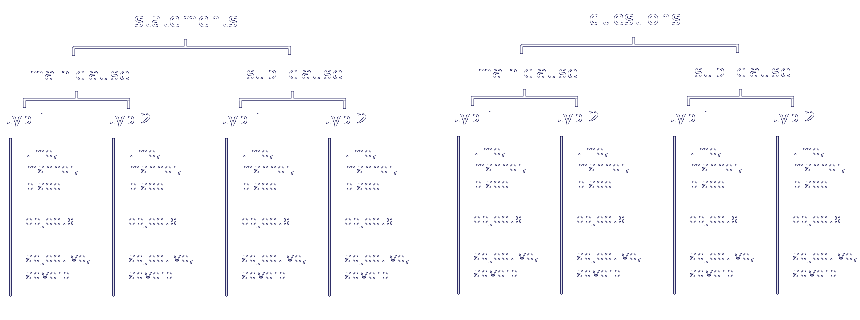
summary
statements
typ 1 (Präsens, Präteritum)
typ 2 (Perfekt, Future, Modal)
main clauses
subject
main verb
other elements
(main verb prefix)
subject
"helping verb"
other elements
main verb
subordinate clauses
subject
other elements
main verb
subject
other elements
main verb
"helping verb"
questions
typ 1 (Präsens, Präteritum)
typ 2 (Perfekt, Future, Modal)
main clauses
main verb
subject
other elements
(main verb prefix)
"helping verb"
subject
other elements
main verb
subordinate clauses
subject
other elements
main verb
subject
other elements
main verb
"helping verb"
The table gives some interesting insights in the complicate topic word order:
1.) Subordinate clauses don't differ in statements and questions.
2.) In main clauses - typ 1 the main verb is usually at the second position. In subordinate clauses it goes to the end and in question to the top position.
3.) In typ 2-sentences the "helping verb" behaves like the main verb (see point 2). The main verb becomes just to a second "other element" which follows the "normal" other elements.
Finally, I want to discuss some other "constructions" which can occour and don't fit into the scheme above:
imperative clauses
Imperative clauses are like a third group of sentences besides "statements" and "questions".
Fortunately, they are quite easy to handle because they are just used in the present tense in main clauses.
imperative for "du" and "ihr"
Consider that there is no subject in this imperative form.
examples :
for "du": Nimm das Kind! (Take the child!)
for "ihr": Nemmtdas Kind! (Take the child!)
I simplified the examples here. The object stands for all possible elements (adjectives, adverbs, time, manner, place ...).
imperative for "Sie"
examples :
for "Sie": NehmenSiedas Kind! (Take the child!)
infinitive with to
Infinitive + to -structures can be considered as a kind of subordinate clause.
They are attached to main clauses.
"Infinitive + to" -structures with "normal" verbs
The "infinitive + to" -structure with "normal" verbs is just added to the main sentence:
example:
Ich habe keine Zeit, dichzusehen. (I don't have time to see you.)
"Infinitive + to" -structures with separable verbs
In "Infinitive + to" -structures with separable verbs the "zu" goes between the prefix and the stem:
example:
Ich habe keine Zeit, dichwiederzusehen. (I don't have time to see you again.)
negation
For the position of "nicht" or "kein" in negative statements / questions please check the topic Negation.


 Cathy & Tom